Designing Spaces for Belonging: Youth Design Durham! at Student U
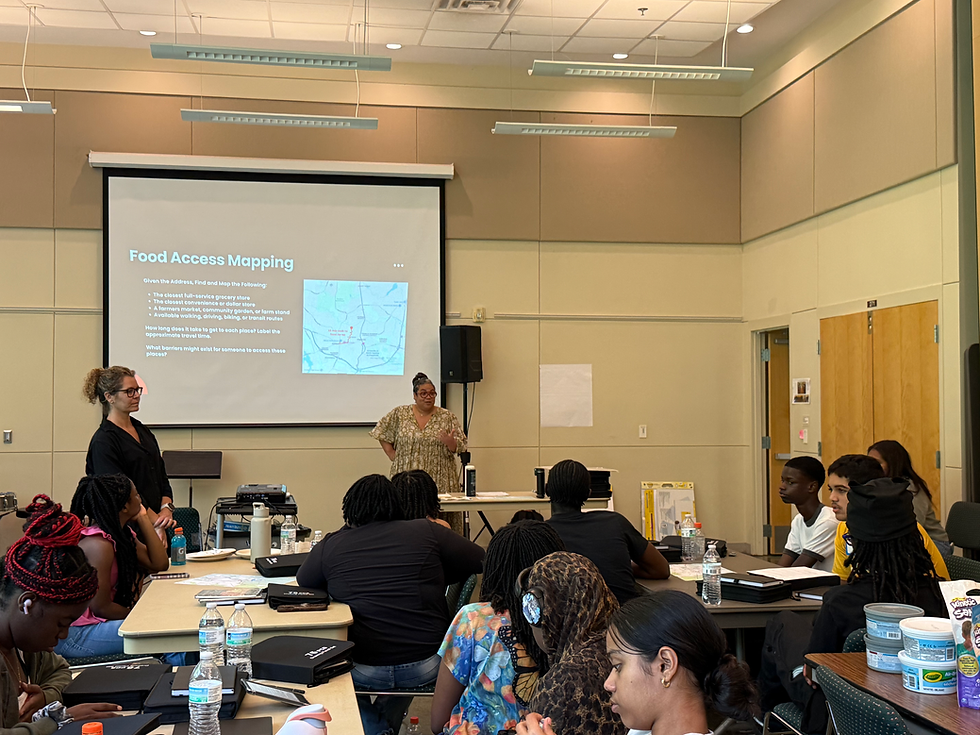
Every Tuesday evening this fall, 15 high school students gather at the W.G. Pearson Center in Durham to design a place that is theirs.
Youth Design Durham!, our program for young people who want to shape their built environment, is running this cohort with Student U, a long-standing Durham youth development organization. The brief is real: an indoor lounge for high schoolers and an outdoor area with a garden and places to hang out.
Prism facilitators lead the sessions, joined by four college mentors from North Carolina Central University's Pre-Architecture program, which is new at the Durham HBCU. The ideas, though, belong to the students.
The first workshop opened with a question before a single line was drawn: where do you feel you belong? Students sketched a place that feels that way to them, or drew an object from it, or wrote about it. Then they named the activities that happen in the spaces they were about to redesign, and we kept a running list on the whiteboard. Those sketches and that list became the foundation of the design.
Students chose the spaces they’d work on and documented existing conditions, doing rough sketches and outlines, measured lengths and widths, and located doors, windows, and other fixed features.
In the second workshop, a Mad Libs-style story got students talking about what people should be able to do in each space. We matched those activities to furniture and spaces, which is how a design program gets written.
By the third and fourth sessions, students were learning the language of architectural drawing: plan, section, elevation, and perspective. One group used its measurements to draw floor plans of the indoor and outdoor spaces. The other worked out what furniture, structures, and lighting each activity needs and how many square feet it takes.
The ideas on the table range from a firepit, treehouse, and tire swing outside to a music studio, hanging chairs, and a community board inside.
What’s next?
The group moves into detailed drawings and model building in November, then prepares to present their designs to the community in early December.
We want students to leave with more than a finished design. They learn the design process, find out how their own creativity works, and build skills in drawing, speaking, and expressing ideas. They also get to say what a space made for them should feel like, which is a form of belonging.
Thank you to Student U for hosting us and to our NCCU mentors for showing students what studying architecture looks like. This program is made possible by the support of the Durham Youth Services Division and Duke Community Affairs.


Comments